
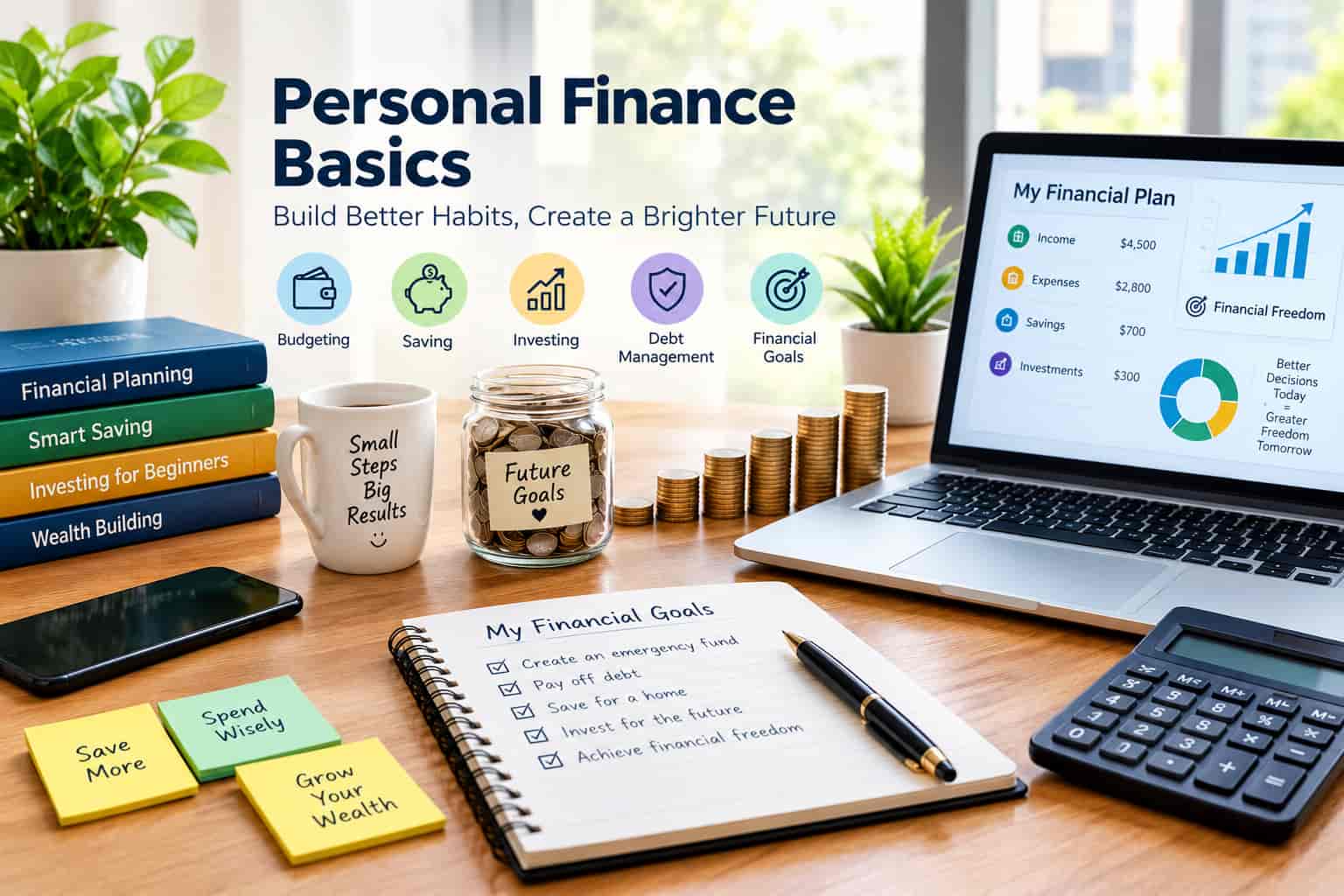

Personal Finance Basics are the key components to a financially stable future. Regardless of your income, financial success is all about how you manage your income, expenses, savings, investments and long-term goals. If you’ve been putting in the effort for several years to earn more, but haven’t acquired the habit of managing your money well, you are not alone. This means that, even in some cases, having more money doesn’t necessarily lead to financial stability.
Suppose you get paid at the beginning of the month and after a couple of weeks you don’t understand where all your salary went. You are not alone. Financial planning isn’t a means of limiting your lifestyle. It’s all about using every rupee, dollar or pound to build up the future. After grasping the basics of money management, wealth building will no longer be a black art.
What Are Personal Finance Basics?
Personal finance is all about making choices concerning how to make, spend, save, invest, borrow and protect your finances. It provides you with a plan to help you manage your finances and plan for opportunities and difficulties that lie ahead. Rather than making random financial decisions, you develop a system that will help you meet your short- and long-term financial needs.
Money is the key to personal finance. Once you have a grasp on things like budgeting, cash flow management, emergency savings, retirement planning and investing, you’ll be able to make better decisions with more confidence. Education on personal finance is still a critical topic today, since the majority of adults correctly answer just half of the fundamental financial literacy questions, according to research from the TIAA Institute’s Personal Finance Index.
Why Personal Finance Matters More Than Ever
Today, the way of life is a hectic one. Subscription services, pay online, e-commerce, credit cards and buy now, pay later allow spending to be simpler than ever. If you don’t have a plan for your finances, then your money could be lost and it won’t be having a positive impact.
Having good personal financial practices decreases financial stress and enhances decision making. The first step towards any and all financial goals – whether it be owning a home, launching a business, generating passive income, or becoming financially independent – is to take control of finances. Research always reinforces the point that those with a higher level of financial knowledge save more, invest more wisely and make less expensive financial blunders.
Understanding Cash Flow and Budgeting
The first step to wealth creation is to understand cash flow. Cash Flow is the flow of money, both in and out of your life. Income can be earned by working, freelance, business, investments or from a side business venture. Costs covered are for accommodation, travelling, food, insurance, utilities and living expenses.
Budgeting gives you the opportunity to allocate your money to priorities, as opposed to asking, ‘where did all my money go?Budgeting helps you assign your funds to priorities rather than ask yourself, ‘where did all my money go? Budgeting isn’t a time to do without fun. It’s a matter of spending now and investing for the future. By keeping track of the expenses on a regular basis, it becomes possible to see patterns. People simply don’t realize how much they are spending with their small purchases made on a daily basis. An informed workforce makes for more informed and better decisions, and more effective financial management.
Building an Emergency Fund
The first step to financial security is PREPARATION. Even a well-balanced budget can be thrown off by an unexpected event like medical, job, car repair or emergency household expenses. An emergency fund can keep you from experiencing long-term financial setbacks from temporary problems.
Household financial surveys conducted by the Federal Reserve indicate that just 55% of adults have three months’ worth of expenses saved for emergencies, and many face financial difficulties when facing a financial shock. That same study revealed that emergency savings are one of the best indicators of financial resiliency. By establishing an emergency fund, you are making space in the event of tough times. The key is, any amount that you can contribute can add up to good cover as time goes on.
Saving Money the Smart Way
Saving money is often considered to be what is left over after paying your expenditures. The financially successful people do just the opposite. Saving is paramount, NOT an option. They don’t wait until the end of the month to save any money, but they save as soon as they have an income.
A recent survey of consumers confirms that the need to save for emergencies is one of their most important financial needs. But a big proportion of the population do not have enough savings buffers. It’s important to establish a savings habit early because it will help you get ready for opportunities in the future and it will lessen your reliance on debt. It is important to be consistent with it rather than big. Repeatedly making small deposits may be better than one large deposit on a sporadic basis because of the habit.
Managing Debt Without Losing Control
Debt could facilitate financial development or can be a barrier for financial development for a long time. Mortgage might assist you in getting property, business financing can aid in growing the business. High-interest consumer debt, however, can often make it difficult to make financial advances and can also decrease flexibility in the future.
If you don’t pay off your credit card balance, it becomes a very costly enterprise. Interest charges build up rapidly and can be used for savings and investments. When it comes to managing your debt, the key is to minimize the debt that has a high interest rate and still have a positive cash flow. If debt is kept in check, then there will be more resources available to participate in activities that build wealth.
Investing and Wealth Building
Saving is not so great as investing to increase. With inflation slowly diminishing purchasing power, long-term investing is a useful strategy for financial planning. These are all a part of the modern methods of wealth building, ranging from stocks and index funds to ETFs, real estate investments, and retirement accounts.
Successful investors are consistent rather than looking to make a prediction about short-term moves. When you are patient you will reap compound growth. When you invest money today, it can bring back money; and it can bring back additional money over time. Often years of disciplined investing is a key to financial independence, not just a single lucky event.
The Connection Between Financial Literacy and Financial Freedom
Financial freedom comes as a result of strategy. It is built with financial literacy, good decision making and action. All monetary goals are based on comprehending the way money works. Budgeting supports savings. Saving provides protection in case of emergencies. Financial stress can be alleviated by emergency protection. By reducing the stress level, you can concentrate on investing and growing your wealth.
Incorporating financial education into the curriculum has been proven to raise people’s likelihood of saving consistently, reducing their debt load, and planning for retirement. Knowledge is the best investment you could possibly make in financial education and every financial decision you make in the future will be of aid to you.
Common Personal Finance Mistakes to Avoid
There are lots of financial problems that start from minor errors. Spending more than you earn, paying mostly with credit cards, not saving for emergencies, and not saving for investments can make it difficult to make progress toward your financial goals. The second one is regarding only increasing income and not spending.
In order to be successful financially, you must make money and effectively manage it. Having a better-paying job doesn’t mean that you are financially secure. Habits, planning and thinking, make lasting results.
Personal Finance and Long-Term Financial Goals
All financial transactions should help you get closer to a financial goal. Clear objectives are a compass for financial independence, early retirement, home ownership, business growth and generational wealth. Goals help to make money management a meaningful strategy.
If your goals are in line with your priorities, then it becomes easier to measure your progress in your financial decisions. Little bits of improvements, often, can make big improvements over the years. Gaining wealth isn’t all about drastic measures. The result of a number of excellent decisions over the years.
Conclusion
Personal Finance Basics are the path to financial security, wealth building and financial success. The knowledge of budgeting, cash flow management, saving for emergencies, debt management, investing and financial literacy can help you to make informed decisions about how to use your finances. So every action you make now positively improves your financial situation in the future.
There is no secret to financial freedom; it is not for a select few elite individuals. It’s possible only once you establish great financial behaviors, maintain them and focus on growth over time. Earlier is better when it comes to learning about personal finance, and the more opportunities you get the better.
FAQs
What do you understand about Personal Finance Basics?
Personal Finance Basics are: budgeting, saving, investing, debt management, financial planning, cash flow management and financial goal setting.
What is the appropriate amount of savings to have in an emergency fund?
Financial experts say that people should have three to six months’ worth of living expenses saved up.
What is the difference between saving and Investing?
Saving is the idea of preserving money for the near future and investing is the idea of building money for long-term needs, preferably in assets like stocks, ETFs and real estate.
What are the ways financial education can help achieve financial well-being?
Having financial literacy makes you better prepared to make decisions about your budget, debt, investments, retirement and your finances in general.