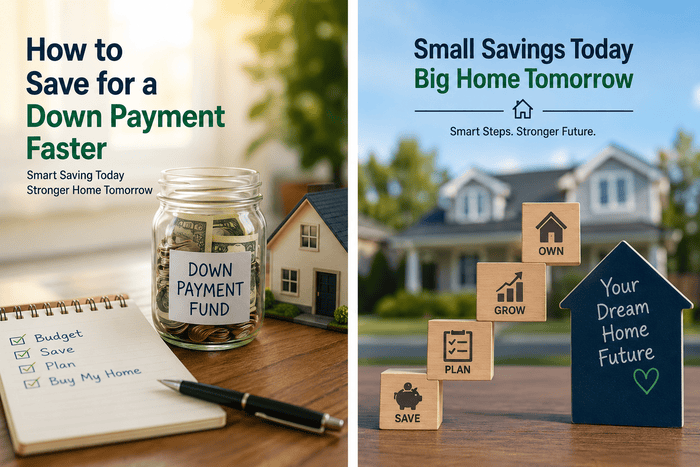

Learning how to save for a down payment faster can help you become a homeowner sooner and reduce financial stress during the buying process. While home ownership costs have increased in recent years, this shouldn’t stop you from making it a goal for yourself. Many buyers postpone purchasing a home because they believe they need a large amount of cash before qualifying for a mortgage.
In fact, there are several loan options available that will enable eligible buyers to purchase a home with a much smaller down payment than they realize. The National Association of REALTORS® (NAR) recently released statistics indicating that first-time home buyers typically put 10 percent down and that qualified buyers can still buy a home with as little as 3.5% down with an FHA loan.
For eligible buyers, there are some conventional loans that require just 3%. These options can help increase the number of ways you can access home ownership, but it’s still important to have a good savings strategy to achieve your goal. Rather than being concerned about the time it might take, try to build habits that will help you get closer to your goal each month. Sometimes it’s the small things that will make the most impact, not the big ones. When every dollar has a clear purpose, you will find that it will make steady progress and that it will be easier to deal with.
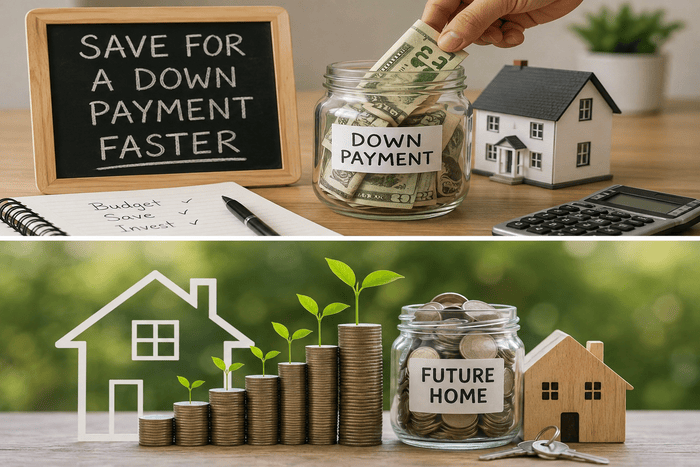
Find Your Real Savings Goal
Many future homeowners make the mistake of choosing a random savings target without calculating the actual amount they’ll need. The down payment is just a small portion of the price of a home. There will also be closing costs, a home inspection, moving costs, utility deposits, and the cost of unexpected repairs once you have moved in that you will need to cover.
If you intend to go out and buy a $400,000 house, for instance, with a 5% down payment, you will need just $20,000 for the down payment. After you factor in closing costs and other initial costs, you’ll probably need to save much more. When you know the total amount at the outset, it will be easier to come up with a realistic plan for monthly savings rather than improvising.
Separate Your Home Savings From Everyday Money
If you have your down payment in the same account you use for bills, groceries and entertainment it is much easier to see where the money is going, and you’re less likely to be tempted to use it elsewhere where it should not go. A separate savings account helps you to separate your budget from your home savings.
Many people opt to open a high-yield savings account (HYSA) because it typically provides more interest than a standard savings account, but you are still able to easily access your money when it’s ready for use in a home purchase. If you don’t spend a ton of money on it each month, every extra dollar adds to your savings without putting in extra effort.
Build Your Budget Around Your Future Home
It’s often a matter of spending money on a specific purpose before wasting it. First look through the previous 2-3 months of statements. Instead of looking for one expensive purchase, pay attention to spending habits that quietly reduce your savings every month. Individually, these expenses may seem small. Together, however, they can quietly consume hundreds of dollars every month and slow your progress toward a home purchase.
Make Saving Automatic
If you’re wondering how to save for a down payment faster, creating automatic savings habits is one of the most effective strategies. One of the most helpful methods for being consistent is to make it easier to think about saving. By making the transfer automatic every payday, you’re essentially making your savings the first recipient of your paycheck, and only a small portion of the money can be spent later.
It is effective because it allows you to save without having to make the decision every month. If you get a raise, bonus or promotion in the future, you should raise your contribution right away. You will be able to make them a lot better towards owning a home without having to cut down much on your monthly spending.
Put Extra Income to Work
Temporarily increasing your income can help you save for a house down payment much faster than cutting small daily expenses. Don’t use extra money for spending, set it all aside to pay off your down payment.
A few months can make a difference with freelance projects, weekend work, online tutoring, selling off unused furniture, and/or seasonal jobs. The income is in addition to what you’re spending every month, so this can make it easier than cutting back on what you spend.
Protect Every Unexpected Dollar
Extra money can come from tax refunds, a year-end bonus, cash gifts or any other unexpected windfalls that can enhance your home fund. It could be that you want to take a vacation or make a large purchase with this money, but you might be surprised how rapidly your home-buying process will progress if you use it for your down payment.
Recent National Association of REALTORS® data also reveals that personal savings are the top source of down payment funds for first-time home buyers, underscoring the importance of saving regularly.
Measure Your Progress Every Month
If you are on track, seeing your savings increase will keep you motivated, and if you are behind schedule you will have time to catch up. At the end of each month, check against a monthly goal. If you’re saving more than you thought, you should continue doing so. If you’re lagging, check your budget and find more ways to save before little changes start to have a significant impact on your schedule.
The fact is that buying a home is not just a question of whether or not you can get a mortgage. Mortgage requirements vary by lender, loan type, and your financial profile, so comparing multiple lenders before applying can help you find the best option. It’s also about making sure that you prove to yourself that you can manage your finances on a regular basis. Establishing good savings practices early can have a lasting impact on your future financial well-being long after you’ve moved into your new homeownership with your keys in hand.
Improve Your Credit Score While You’re Saving
Saving for a down payment is only one part of the home-buying budget. Your credit history is also checked by the mortgage lender prior to approval. Having a good credit score can help you secure a better interest rate, potentially saving you money in your mortgage down payments over the loan’s duration.
A dramatic financial change is not necessary over a short period of time. You can build up your credit profile over time by paying all your bills on time, keeping your credit card balances low, avoiding unnecessary debts during the savings period. Just an improvement in your rating may make a difference for your mortgage when the time comes.
Explore First-Time Homebuyer Assistance Programs
There are a lot of home buyers who delay buying a house because they think they have to save every dollar on their own. Actually, in the U.S. there are lots of state and local housing agencies that have first-time house buyer assistance programs. You can get assistance that covers down payment, grants or low-interest loans based on your income and your location.
The eligibility requirements differ from state to state so don’t automatically assume you don’t qualify for a home loan. You may be able to reduce the amount of time you need to save by several months or even years with these programs.
Avoid Taking on New Debt
While purchasing a new car, or financing a high dollar piece of furniture, may seem affordable right now, with new bills coming in, savings for the home may be sacrificed. It can also raise your debt-to-income ratio (DTI) which is part of the mortgage application process.
Generally, you are in a better financial position if you make big buys that you have to finance after closing the house. Maintaining low monthly debt payments means that you have more flexibility when you deal with your lender’s financial review.
Resist Lifestyle Inflation
When people get a raise, they tend to spend more rather than save more. An increase in income very easily gets lost in better cable packages, newer gadgets or pricier trips.
Don’t increase your lifestyle right away, but instead, use most of the extra money to save for your home. With this strategy, you can be able to save more and more without sacrificing anything you are already enjoying in your life.
Don’t Wait for the “Perfect” Time
Many buyers wait for years for home prices to come down or for mortgage rates to come down. Obviously, the market plays a role, but no one can determine the precise time when the ideal buying opportunity will present itself.
But if you’re doing well financially, your income is steady, and you’ve saved enough, it may be better to wait indefinitely in order to pay more for your home in the future. Don’t try and forecast the housing market, focus on getting ready financially.
Common Mistakes That Slow Down Your Savings
There are some habits that make it more difficult to reach your goal than it should be.
- Using tax refunds for spending rather than saving.
- Leaving your credit history alone until you are in the application process.
- Spending big money before making a home purchase.
- Irregular saving from month to month.
- Not accounting for closing costs and moving costs.
- By avoiding these common mistakes, you can help ensure your savings plan is on the right track and avoid any unnecessary financial burdens.
Keep Your Emergency Fund Separate
While it might seem appealing to have all your savings and apply them to your down payment, if you take out all your savings you will be in a difficult situation once you have moved into your new home. By maintaining an emergency fund, rather than using high-interest credit cards and personal loans, you’ll be able to manage these scenarios.
Small Financial Decisions Create Big Results
The purchase of a property is something more than saving a huge amount of money. It’s about your financial decision making over time that is aligned with the goal. Each unnecessary expense you save, each additional dollar you make, each automatic transfer you make brings you closer to home ownership.
It can take months or even years, but it works very well if done consistently as compared to any short-term aggressive saving. As a result, you’ll be in a much better position when you finally are ready to apply for a mortgage account and buy your home because you will focus on the target and adjust your plan as you are earning more money.
Conclusion
By following these practical strategies, you’ll understand how to save for a down payment faster and move closer to buying your dream home. Your financial decisions now will make a difference whether you’re ready for the next property. Think in terms of monthly progress, rather than the length of the process. Some changes to your finances no matter how modest can add up over time. When you reach your goal, and you feel financially secure, you’ll be in a much better position to own a home with confidence.
Frequently Asked Questions
Is gift money acceptable as down payment?
Yes. There are mortgage programs that will allow for the use of gift funds from qualified family members or approved donors. Lenders, however, typically need documentation to prove that the funds are a true gift and not to be repaid.
Can you afford to purchase a home with just a 5% down payment?
There are a few conventional loan programs that will allow for a 5% down payment, if you are able to satisfy the credit and income requirements and the lender’s eligibility requirements. That will depend on the type of loan you are getting and the home’s price.
What if you put less than 20% down?
It is not a requirement that you put down less than 20% in order to be eligible to purchase a home. In most instances, the only difference you’ll see is that you’d be asked to pay for private mortgage insurance (PMI) with a conventional loan until you have enough equity in your home.
Do self-employed buyers qualify for a mortgage?
Yes. Self-employed borrowers may be eligible for a mortgage as long as they are able to provide income documentation and meet the lender’s income requirements. Many lenders will check bank statements, business income, tax returns and other financial statements to ensure you have a steady income.
After you buy a house, should you maintain an emergency fund?
Yes. Home ownership involves incurring costs and expenses that are not anticipated, such as maintenance costs and appliance repairs. An emergency fund helps cover unexpected homeownership expenses without relying on credit cards or personal loans.
Is it possible to afford a house with the aid of student loans?
Yes. If you are a borrower with student loans, it does not rule you out of obtaining a mortgage. When considering your debt to income ratio, payment history and overall financial situation, lenders will view your application.
Does it improve your mortgage application to pay off credit cards?
Paying down credit card debts may have a positive impact on your credit utilization ratio and also reduce the monthly payments you make. Both of these can help improve your mortgage application and potentially help you get better mortgage rates.
Is waiting to purchase when mortgage rates drop a good idea?
Not necessarily. Even though lower mortgage rates may lower monthly payments, patience may not be the optimal investment move. If you have a steady income, you have saved enough, and you have found a house that you can afford, then it might be better for you to buy sooner rather than later, since you don’t have to try to guess when it’s best.